Vinyl Sticker Packs Explained: What Makes a Good Pack Worth Buying or Trading?
TLDR
Vinyl sticker packs are groups of stickers sold or traded together, usually built around a theme, artist, style, brand, or visual mood.
A good sticker pack feels curated. It should not feel like someone swept a factory floor and called it variety.
The best packs usually have strong artwork, consistent quality, useful sizes, durable materials, and enough variety to stay interesting.
Collectors should look for theme, artist identity, print quality, finish, condition, and trade value before buying.
This post helps sticker fans and collectors evaluate vinyl sticker packs by explaining what makes a pack useful, collectible, and worth the money, so they can buy or trade with fewer regrets.
Intro
A sticker pack can feel like a tiny treasure chest. It can also feel like a bag of leftovers.
That is the problem with vinyl sticker packs. They look simple from the outside, but quality varies a lot. Some packs are carefully built around original artwork, strong themes, durable materials, and real collector appeal. Others are just random designs bundled together because “50 pieces” sounds better than “seven you will actually like.”
The trick is knowing what you are really buying. A good sticker pack is not only about quantity. It is about artwork, material, theme, size, finish, usability, and whether the stickers still feel interesting after the first look.
A pack should make you want to sort, use, trade, save, or display the stickers. If it only makes you wonder why you now own four different cartoon tacos with sunglasses, the pack may not have been doing its best work.
What Are Vinyl Sticker Packs?
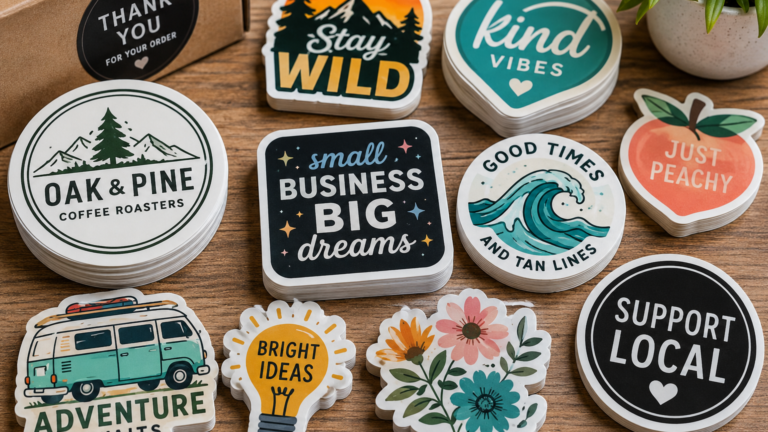
Vinyl sticker packs are bundled sets of stickers printed on vinyl or vinyl-like material. They may include a handful of stickers from one artist, a themed set from a brand, a collection of designs from several artists, or a large assortment of mixed decals.
The word “vinyl” matters because vinyl is usually more durable than paper. Vinyl stickers are commonly used for laptops, water bottles, notebooks, cases, skateboards, packaging, helmets, toolboxes, and other surfaces that get handled often.
That said, vinyl alone does not automatically make a sticker pack good. A vinyl sticker can still have blurry artwork, weak adhesive, poor cutting, bad color, or a finish that scratches too easily. Material is one part of the decision, not the whole decision.
A good vinyl sticker pack answers a few basic questions:
- What is the theme?
- Who made the artwork?
- Are the stickers useful sizes?
- Is the print quality clean?
- Are the shapes cut well?
- Does the finish fit the designs?
- Would you use, save, or trade most of the pack?
The last question is the big one.
Quantity Is Not the Same as Value
Sticker packs often compete on quantity. You will see packs with 10, 25, 50, 100, or even hundreds of stickers. That can be fine for casual decorating, party favors, classroom rewards, packaging inserts, or sticker bombing low-stakes items.
But for collecting, quantity can be a trap.
A 100-piece pack is not automatically better than a 10-piece pack. If only a few designs are strong, the rest become clutter. A smaller pack with better art, stronger materials, and a clearer theme can be more satisfying.
Think of sticker pack value in three layers:
| Value Type | What It Means | Why It Matters |
|---|---|---|
| Use Value | You want to put the stickers on things | Good for laptops, bottles, journals, cases, and daily objects |
| Collection Value | You want to save or display the stickers | Good for artist drops, rare designs, and themed collections |
| Trade Value | Other people may want the stickers | Good for duplicates, limited runs, and scene-specific art |
A cheap bulk pack may have decent use value. A curated artist pack may have more collection value. A street art pack or limited release may have stronger trade value.
The right pack depends on what you want from it.
A Good Sticker Pack Has a Clear Theme
The best vinyl sticker packs feel intentional. They do not need every sticker to look the same, but the pack should have a reason to exist.
A theme can be obvious, like frogs, horror, skateboarding, botanical art, fantasy creatures, cats, coffee, tattoos, street art, or retro gaming. It can also be based on color, mood, artist, event, location, or visual style.
A good theme helps the pack feel complete.
For example:
- A ghost sticker pack might include cute ghosts, spooky houses, tiny gravestones, potion bottles, and moon shapes.
- A street art pack might include tags, character stickers, stencil-inspired graphics, and bold symbols.
- An artist pack might show different characters or pieces from one creator’s body of work.
- A botanical pack might include flowers, mushrooms, leaves, insects, and garden tools.
A weak pack often feels random. You get one anime cat, one burger, one motivational quote, one skateboard, one planet, one banana, and one sticker that looks like it escaped from a dentist’s waiting room.
Random can be fun. But random is not the same as curated.
Artwork Quality Matters More Than the Count
A sticker pack lives or dies by the artwork.
Good sticker artwork should hold up at the size it is printed. That means strong linework, clear contrast, readable shapes, and enough visual focus. Highly detailed artwork can work, but it has to be printed large enough and sharply enough.
Common artwork problems include:
- Blurry images
- Tiny text
- Low contrast
- Thin lines that disappear
- Overcrowded designs
- Bad cropping
- Awkward cutlines
- Generic clipart feel
- Inconsistent styles with no clear reason
If a pack includes original artist work, that is usually a plus. It gives the pack identity. It also makes the stickers more interesting to collect or trade because there is a real creator behind them.
For artist-made packs, look for the artist’s name, shop, social handle, series name, or collection title. A pack with context is easier to value and remember.
Print Quality and Finish Should Match the Use
Vinyl sticker packs are often bought for surfaces that get handled: laptops, water bottles, sketchbooks, phone cases, and storage bins. That means print quality and finish matter.
A good vinyl sticker should usually have clean edges, solid color, sharp details, and a finish that protects the print. Laminated vinyl stickers tend to offer better protection than uncoated stickers, especially for handling, moisture, and outdoor exposure.
The finish also changes the feel:
| Finish | Best For | Tradeoff |
|---|---|---|
| Gloss | Bright color and punchy designs | Shows glare and fingerprints more |
| Matte | Softer, cleaner, less reflective look | Can make some colors feel less intense |
| Holographic | Bold effects and novelty designs | Can distract from detailed artwork |
| Glitter | Playful designs and high-impact stickers | Not ideal for every art style |
| Clear | Windows, packaging, minimal designs | Needs strong contrast to stay readable |
| Paper | Journals, planners, packaging, indoor use | Usually less durable than vinyl |
A finish should support the artwork. Glitter on a magical frog? Sure. Glitter on a subtle black line drawing? Maybe not.
Specialty materials are fun, but they do not fix weak art. They can even make weak art louder, which is rarely what anyone needs.
Size Variety Can Make or Break a Pack
Sticker packs should include sizes that people can actually use.
A pack full of oversized stickers may look impressive but can be hard to place. A pack full of tiny stickers may be cute but feel less valuable. A better pack usually gives a mix of sizes.
Useful sticker pack sizes often include:
- Small filler stickers for journals, cases, and albums
- Medium stickers for laptops, bottles, and notebooks
- A few larger feature stickers for bigger surfaces
- Simple shapes that are easy to place
- A balanced mix of vertical, horizontal, and compact designs
Size also affects detail. A detailed design needs more room. A simple icon can be small and still work.
Before buying a pack, look for size information. If the listing does not show dimensions, compare the stickers to a hand, laptop, bottle, backing card, or ruler in the product photos. Guessing from a perfect product mockup can lead to disappointment.
Good Packs Are Easy to Use, Save, or Trade
The best vinyl sticker packs give you options.
You might use a few stickers right away, save the best ones in a sticker album, and place duplicates in a trade pile. That flexibility makes a pack more satisfying.
For collectors, trade value matters. A sticker pack is better for trading when the designs are distinct, the condition is clean, and the artwork has some identity. Packs from known artists, events, street art projects, galleries, or limited releases are often more interesting to other collectors than anonymous bulk decals.
If you plan to trade, keep the stickers unused and flat. Store duplicates separately. Add small notes if you know the artist, date, event, or source. Nobody wants a mystery sticker with a bent corner and a suspicious crumb attached.
The crumb is not provenance.
When Random Sticker Packs Make Sense
Random sticker packs are not evil. They just serve a different job.
A random vinyl sticker pack can make sense when you need:
- Lots of stickers for kids
- Party favors
- Event giveaways
- Classroom prizes
- Packaging extras
- Casual decorating
- Sticker bombing
- Low-stakes trade fillers
- A cheap way to discover styles
The mistake is expecting a random bulk pack to feel like a curated artist collection. That can happen, but it is not the usual outcome.
If you are buying for collection value, choose smaller curated packs. If you are buying for casual volume, random packs can be fine.
What to Check Before Buying a Vinyl Sticker Pack
Use this quick checklist before buying:
- Theme: Does the pack have a clear idea?
- Artwork: Do you actually like most of the designs?
- Artist: Is the creator named or credited?
- Material: Is it vinyl, paper, clear film, or something else?
- Finish: Gloss, matte, holographic, glitter, clear, or uncoated?
- Durability: Is it laminated or protected for the intended use?
- Size: Are dimensions shown?
- Quantity: Is the number of stickers useful, or just inflated?
- Duplicates: Are duplicates included intentionally?
- Use Case: Are these for collecting, trading, decorating, or giveaways?
- Photos: Are real photos shown, not only mockups?
- Condition: For trades or secondhand packs, are the stickers flat and unused?
A pack does not need to be perfect. It just needs to make sense for why you are buying it.
How to Store Vinyl Sticker Packs
If you are not using the stickers immediately, store them like small art prints.
Keep vinyl sticker packs:
- Flat
- Dry
- Clean
- Away from direct sunlight
- Away from high heat
- Away from damp storage areas
- Separate from dirty or used stickers
For casual storage, a binder with sleeves works well. For nicer packs, keep the original packaging or backing card if it has artist information. For rare or sentimental stickers, use archival-quality storage materials and avoid anything that bends the stickers.
Do not leave good stickers in a hot car. Vinyl may be durable, but heat is still rude.
FAQs
Are Vinyl Sticker Packs Waterproof?
Some are water-resistant or waterproof, but not all. Vinyl material helps, and laminate usually improves durability. The ink, adhesive, coating, and finish all affect how well a sticker handles moisture.
Are Bigger Sticker Packs a Better Deal?
Not always. Bigger packs can be good for casual use, but smaller curated packs are often better for collecting. Value depends on how many stickers you actually like and use.
What Makes a Sticker Pack Collectible?
Artist identity, limited runs, event exclusives, strong themes, original artwork, clean condition, and trade demand can all make a sticker pack more collectible.
Should I Buy Random Sticker Packs?
Buy random packs for volume, decorating, party favors, or casual fun. For serious collecting, artist packs and themed packs are usually more satisfying.
What Is the Best Finish for Vinyl Sticker Packs?
Gloss is good for bright color. Matte is good for a softer look. Holographic and glitter work best when the effect supports the artwork. Clear stickers need strong contrast.
How Should I Store Sticker Packs?
Store them flat, dry, clean, and away from sunlight or heat. Use sleeves, binders, boxes, or original packaging, especially for artist-made or limited sticker packs.