What Are Designer Stickers? A Real Guide to Sticker Art, Slaps, Trades, and Small Runs
Last updated: April 6, 2026
If you spend any time around sticker artists, you learn fast that designer stickers are not just random decals with good printing. They sit in a different lane. They carry an artist’s voice, a scene’s inside jokes, a little bit of scarcity, and often a whole lot of personality for something that might only be three inches tall. That is part of the appeal. A sticker can be cheap, quick, and easy to move around, but it can still feel like a real piece of art.
That difference matters. A generic promo sticker is usually trying to get you to remember a brand. A designer sticker is usually trying to say something, show a style, mark a moment, or connect one artist to another person out in the world. Sometimes it is funny. Sometimes it is aggressive. Sometimes it is just a creature head with a perfect silhouette and great color choices. But the point is that it feels authored.
Public descriptions tied to DesignerStickers.net and related Discordia projects point in exactly that direction. The site has been described as an online showcase of designer sticker artists, and connected sticker pack projects describe designer stickers as small-run works that are often traded directly between artists. That is a pretty good working definition, honestly. It tells you this is a culture first and a product second.
What Makes Designer Stickers Different
The first thing that separates designer stickers from ordinary stickers is intent. With designer stickers, the artist usually comes first. The sticker is not just packaging support or event swag. It is the finished object people care about.
That leads to a few traits that show up again and again.
First, the design tends to be led by style. You notice line work, color choices, character design, lettering, or attitude before you notice any sales message. Even when a logo appears, it often feels like part of a visual identity rather than an ad slapped onto vinyl.
Second, the sticker is usually made for a specific audience. It may speak to toy collectors, street art people, zine fans, tattoo culture, punk scenes, skate culture, or just followers of one artist’s weird little universe. And yes, weird can be a compliment here.
Third, designer stickers often have a stronger sense of release culture. Instead of being permanently available forever, they may come out in short runs, seasonal packs, collaborations, or trade-only drops. That gives them some life. You remember where you got them.
Why Small Runs Matter So Much
Small runs are a big part of what gives designer stickers their identity. When a sticker is made in a limited quantity, it changes how people treat it. It is not just something to peel and forget. It becomes a collectible, a trade item, or a little record of where the artist was at that moment.
There is also a practical reason. Small runs let artists experiment without betting the rent on one design. They can try a new character, a rougher drawing style, a sharper slogan, a different material, or a niche joke that only their own people will get. If it lands, great. If not, the artist learns and moves on.
That freedom is part of why sticker scenes stay interesting. Big polished production has its place, but small-run work keeps the culture from getting too clean and too predictable. And i think that matters more than people admit. Once everything starts feeling optimized, the fun drains out of it.
Small runs also make trading work better. You are not sending out the same mass-market object that anyone can buy from any shop. You are swapping something that feels a little closer to a print, mini zine, or hand-to-hand release.
Slaps, Tags, Packs, and Trades
If you are new to all this, the vocabulary can feel slightly annoying at first. Here is the quick version.
A slap is usually a sticker meant for public placement. It can be a tag, character, phrase, symbol, or logo. Street sticker exhibitions have described stickers as a democratic art form because they are easy to create, easy to distribute, and effective at catching people in everyday spaces. That is why slaps matter. They move fast.
A tag sticker usually leans harder into a name, mark, or identity hit. It is less about a polished illustration and more about presence. Quick recognition matters more than detail.
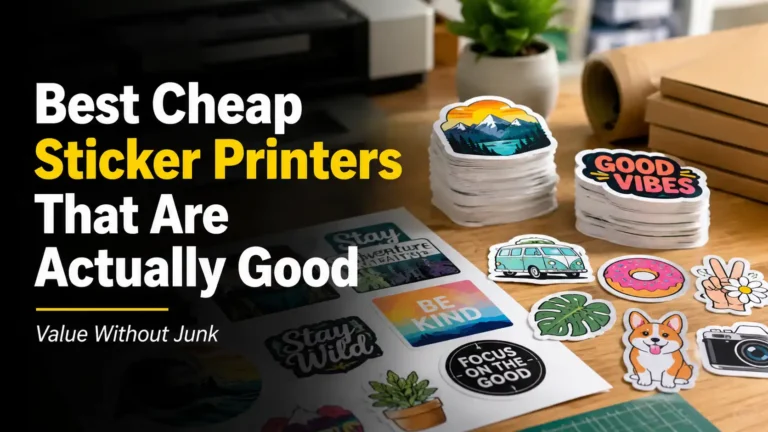
A sticker pack is exactly what it sounds like, but the better ones feel curated. They are not just several leftovers shoved into a bag. They are grouped with intention. Related pack guides from current sticker printers describe sticker packs as retail-ready bundles with multiple die cut designs, often organized around a theme, header card, or display concept. In a designer context, the strongest packs usually feel like one small body of work.
A trade is the social glue. Artists swap stickers with each other through mail, at shows, through DMs, or through community projects. Some related designer sticker pack listings even describe these works as pieces that are normally only available by direct trade between sticker artists. That tells you a lot. Access and relationships are part of the format.
How Artists Actually Release Designer Stickers
From the outside, it can look random. Somebody posts a new slap, people want it, it appears in envelopes, and that is that. But the best releases usually have some structure behind them.
Some artists build around one core icon. Think one face, one mascot, one phrase, one monster, one handstyle. They release new versions over time and people follow the evolution.
Some build around sets. A few related designs, often with matching color logic or recurring shapes, get released together as a pack. This is great for artists who think in worlds instead of single images.
Some artists lean into collaboration. They trade reinterpretations, split a pack, share a theme, or make event-specific work. That is where the scene gets lively because you can literally see influence moving from one artist to another.
And some artists treat the sticker as an entry point. The sticker pulls people into prints, toys, pins, shirts, books, or shows. That does not make the sticker less important. If anything, it shows how strong the format is. A cheap, portable object becomes the handshake.
What Collectors and Other Artists Notice First
People new to designer stickers often focus on the image alone. That is normal. But in practice, collectors and artists tend to notice a few specific things.
They notice silhouette. If the shape reads from a few feet away, that sticker has a chance.
They notice confidence. A clean simple design usually beats a crowded one trying too hard.
They notice print fit. Does the material make sense for the art? Is the finish doing anything useful? Are the lines crisp? Is the cut shape helping or hurting?
They notice personality. Not forced “brand voice” personality either. Real personality. The kind where you can tell who made it without checking the back.
And they notice restraint. This one gets overlooked. Leaving some breathing room in a design is not laziness. It is often the difference between a sticker that reads instantly and one that turns into visual mush on a mailbox.
A quick mental checklist helps:
- Strong focal point
- Clear read at small size
- Good shape and border decisions
- Material that suits the art
- A voice that feels specific
That is not the only way to judge a sticker, but it is a solid start.
Why Designer Stickers Still Matter
The easiest mistake is to think stickers are too small to matter. But sticker culture keeps proving the opposite. Museums, traveling exhibitions, digital archives, and mail art collections have all treated stickers and related adhesive ephemera as serious cultural material. That does not mean every slap is sacred. Some are junk. Let’s be honest. But as a medium, stickers punch way above their weight.
They are fast to make, fast to circulate, and good at carrying style across distance. One envelope can connect artists in different cities. One pack can introduce a collector to five new names. One sticker on a laptop can start a conversation that a poster never would.
That is why designer stickers keep sticking around. They are accessible without being disposable. They can be collectible without becoming precious. And they are one of the few art forms that still feel comfortable both in a curated archive and on a beat-up traffic box.
If you are trying to understand the niche, start there. Designer stickers are small-format authored works shaped by style, scarcity, trading, and community. They live somewhere between street art, print culture, merch, and personal expression. That overlap is what makes them fun. It is also what makes them worth taking seriously.
Conclusion
So what are designer stickers, really? They are artist-led stickers with identity, context, and scene value. They often come in small runs, travel through trades, show up in packs, and carry more cultural weight than their size suggests. Some are polished. Some are rough. Some look like they were made in ten minutes and somehow still hit harder than a full brand campaign.
That is kind of the whole charm. Designer stickers are immediate, portable, and personal. You do not need a gallery wall to understand them. You just need a decent eye and maybe a little room on your sketchbook, toolbox, or mailer.