What Are Designer Stickers? A Guide to Sticker Art, Artist Stickers, and Collectible Decals
TLDR
Designer stickers are stickers made with a clear artistic point of view. They are often created by illustrators, street artists, graphic designers, or independent brands.
The best designer stickers usually have strong artwork, clean printing, durable materials, and a style that feels intentional.
They can be used on laptops, water bottles, sketchbooks, cases, notebooks, skateboards, and sticker collections.
A good designer sticker is not just “cool art on adhesive.” It has to work at sticker size, survive handling, and still look good when it is seen quickly.
This post helps sticker fans, artists, and casual collectors understand what designer stickers are by explaining how they differ from basic decals, so they can choose better sticker art with more confidence.
Intro
A good sticker does a lot with very little space. It has a tiny window to get your attention, show personality, and still look clean once it is peeled and placed somewhere real.
That is where designer stickers come in. Designer stickers sit somewhere between illustration, street art, graphic design, and collectible print culture. They can be funny, polished, strange, cute, bold, minimal, chaotic, political, nostalgic, or quietly beautiful. The point is not that every sticker needs to be serious art. The point is that the design feels intentional.
Anyone can put a random image on adhesive paper. That does not automatically make it a good sticker. A strong designer sticker has shape, contrast, personality, and a clear reason to exist.
And yes, sometimes that reason is just “this raccoon looks like he has unpaid parking tickets.” That counts.
What Are Designer Stickers?
Designer stickers are stickers created with a strong visual idea, usually by an artist, illustrator, designer, or independent creative brand. They are different from plain labels, basic logo decals, and mass-produced novelty stickers because the design itself is the main reason someone wants them.
A designer sticker might be a die-cut vinyl decal of an original character. It might be a street art sticker with a quick message. It might be a hand-lettered phrase, a detailed fantasy illustration, a pop-art graphic, or a small sticker sheet built around a theme.
The category is broad, but the center is pretty simple: designer stickers are made to be seen, saved, used, traded, collected, or displayed because the artwork matters.
That does not mean every designer sticker is rare or expensive. Some are sold as single vinyl stickers. Some come in sticker packs. Some are part of artist drops, convention merch, zines, gallery projects, skate culture, music scenes, or online shops. Some are made in small batches. Others are printed in larger quantities but still carry a distinct artistic style.
A designer sticker usually has at least a few of these qualities:
- Original artwork instead of generic clipart
- A clear visual style that feels tied to a person, brand, or scene
- Good shape and silhouette so the sticker reads quickly
- Strong color and contrast for small-scale viewing
- Durable material such as vinyl, laminated stock, or specialty sticker paper
- Collectible appeal through limited runs, artist identity, theme, or style
The difference is not always about price. It is about intent.
Designer Stickers vs. Regular Stickers
Regular stickers can be great. A simple label can be useful. A basic heart sticker can still make someone happy. But designer stickers are judged differently because people care about the artwork, not just the adhesive.
Here is the basic difference:
| Type | Main Purpose | What People Care About Most |
|---|---|---|
| Basic label | Identify, organize, or mark something | Readability and function |
| Logo decal | Promote a brand, team, or business | Brand recognition |
| Novelty sticker | Quick joke or decoration | Fun, price, theme |
| Designer sticker | Display original visual style | Artwork, quality, meaning, collectibility |
| Artist sticker | Support or collect a specific creator | Artist identity and design voice |
The edges can overlap. A logo decal can be beautifully designed. A novelty sticker can become collectible. A street art sticker can be both art and promotion. But when someone says “designer stickers,” they usually mean stickers that feel curated, original, and visually deliberate.
Why Sticker Art Became Its Own Thing
Sticker art has roots in street art, graffiti culture, skate culture, music scenes, mail art, zines, independent illustration, and DIY print culture. That mix matters because stickers are easy to distribute and easy to place.
A painting needs a wall. A poster needs space. A sticker can travel in a pocket.
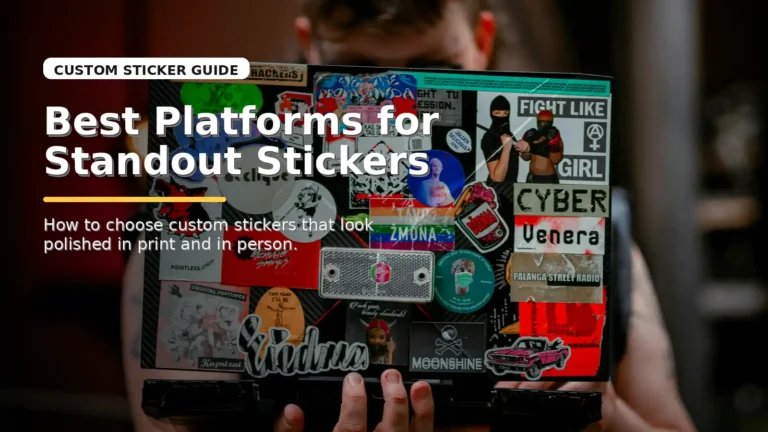
That portability is part of the appeal. Artists have used stickers to spread symbols, characters, jokes, political ideas, tags, small illustrations, and visual signatures across cities, events, sketchbooks, laptops, and personal objects. Sticker art can be public and temporary, or private and carefully preserved.
This is why designer stickers often feel different from ordinary printed goods. They are not only small pictures. They can be little signals. They can say what someone likes, what scene they belong to, what artists they follow, or what sense of humor they have.
A sticker on a laptop is rarely neutral. It is a tiny billboard for taste.
What Makes a Designer Sticker Good?
The best designer stickers work both as art and as objects. A design can look great on a screen and still fail as a sticker if the details disappear, the shape feels clumsy, or the finish does not match the artwork.
A good designer sticker usually gets these things right.
The Artwork Reads Quickly
Sticker art has to work fast. People may see it from a few feet away, on a moving water bottle, on a busy laptop, or inside a crowded sticker wall. If the design only works when someone studies it closely, it may be better as a print than a sticker.
Strong sticker artwork usually has a clear silhouette, defined focal point, and enough contrast to stay readable at small size.
Tiny text is one of the most common problems. A phrase might look fine on a 27-inch monitor, then vanish once the sticker is three inches wide. Good sticker designers know when to simplify.
The Shape Feels Intentional
Die-cut stickers are popular because the cutline becomes part of the design. A clean shape can make the sticker feel finished. A sloppy shape can make even good artwork feel cheap.
The best designer stickers use shape to support the art. A character might have a tight outline. A logo-style sticker might use a badge shape. A detailed illustration might need a soft border so thin parts do not tear or look fragile.
Shape also affects where a sticker feels natural. A round sticker works well on packaging, helmets, notebooks, and cases. A tall vertical sticker may look better on a water bottle. A wide sticker may fit a laptop, toolbox, skateboard, or car window.
The Material Fits the Use
Not every sticker needs to be waterproof vinyl. A paper sticker can be great for packaging, journals, planners, scrapbooks, or temporary use. But if a sticker is going on a water bottle, laptop, helmet, car, or outdoor item, material matters.
Vinyl stickers are often chosen for durability. Laminated stickers can add protection against handling, scratching, moisture, and sunlight. Matte finishes feel softer and more understated. Gloss finishes usually make colors look punchier. Holographic, glitter, clear, and textured materials can add personality, but they should support the design instead of distracting from it.
The material should match the design and the surface.
The Sticker Has a Point of View
This is the hardest part to define, but it is usually obvious when it is missing.
A good designer sticker feels like someone made a choice. The color palette, linework, typography, humor, mood, or character design all point in the same direction. It does not feel assembled from spare parts.
That point of view can be polished or messy. It can be elegant or crude. It can be cute or aggressive. It just needs to feel deliberate.
Common Designer Sticker Styles
Designer stickers cover a lot of visual ground. These are some of the most common styles.
Street Art Stickers
Street art stickers often use tags, icons, symbols, characters, slogans, parody, or social commentary. They are meant to be seen quickly and remembered.
Indie Illustration Stickers
These often come from independent artists, comic artists, tattoo artists, digital illustrators, and small creative shops. They may feature animals, fantasy characters, food, plants, ghosts, cats, cryptids, swords, skulls, cozy objects, or emotional little creatures with better outfits than most humans.
Graphic Design Stickers
These lean on typography, layout, logos, abstract shapes, badge designs, and clean visual systems. They can feel more refined, minimal, or brand-like.
Pop Culture-Inspired Stickers
These reference games, movies, anime, music, memes, fantasy, horror, sci-fi, and internet culture. The best ones add a real artistic spin instead of feeling like a plain copy.
Sticker Sheets
Sticker sheets usually group several related designs on one backing sheet. They are great for planners, journals, scrapbooks, kids, collectors, and anyone who likes a full theme instead of one standalone decal.
How to Choose Better Designer Stickers
The easiest way to buy better designer stickers is to slow down before buying a giant random pack. Random packs can be fun, but they often lead to a pile of designs you sort of like and never use.
Instead, use a simple filter.
Ask yourself:
- Do I like the art enough to use or save it?
- Does the sticker match my style, collection, or surface?
- Is the size practical?
- Does the finish fit the design?
- Does the cutline look clean?
- Is it from an artist or shop I want to support?
- Would I still like this design in six months?
That last question does more work than people think.
It is easy to buy stickers because they are small and inexpensive. But the good ones still take up visual space. A small collection of stickers you genuinely like is better than a drawer full of random designs you forgot you bought.
Where Designer Stickers Usually Look Best
Designer stickers work well on surfaces where the artwork can be seen and where the material makes sense.
Common places include:
- Laptops
- Water bottles
- Sketchbooks
- Notebooks
- Toolboxes
- Phone cases
- Tablets
- Journals
- Skateboards
- Storage bins
- Packaging
- Guitar cases
- Sticker albums
- Trading collections
Use some caution with high-value items, textured surfaces, dirty surfaces, and anything exposed to heat, sun, or frequent washing. A sticker may be durable, but every surface creates a different real-world test.
When in doubt, save the sticker in a book or album until you know where it belongs. There is no shame in being a sticker hoarder with standards.
FAQs
Are Designer Stickers the Same as Artist Stickers?
They overlap, but they are not always the same. Artist stickers usually come from a specific artist or illustrator. Designer stickers can include artist stickers, graphic design stickers, street art stickers, and other visually intentional decals.
Are Designer Stickers Collectible?
Yes, many designer stickers are collectible, especially limited runs, artist drops, convention exclusives, street art stickers, vintage stickers, and stickers tied to a specific scene or time period.
Should I Use Designer Stickers or Save Them?
Either is fine. Some people use stickers right away. Others preserve them in sticker books, binders, sleeves, or flat storage. If a sticker is rare, sentimental, or hard to replace, saving it may make more sense.
What Is the Best Material for Designer Stickers?
Vinyl is a strong choice for durable everyday stickers, especially for laptops and water bottles. Paper stickers can be great for journals, packaging, and indoor use. Specialty finishes work best when they support the artwork.
What Makes a Sticker Look Cheap?
Common issues include blurry printing, weak contrast, awkward cutlines, tiny unreadable text, thin fragile pieces, poor material choice, and generic artwork without a clear style.